
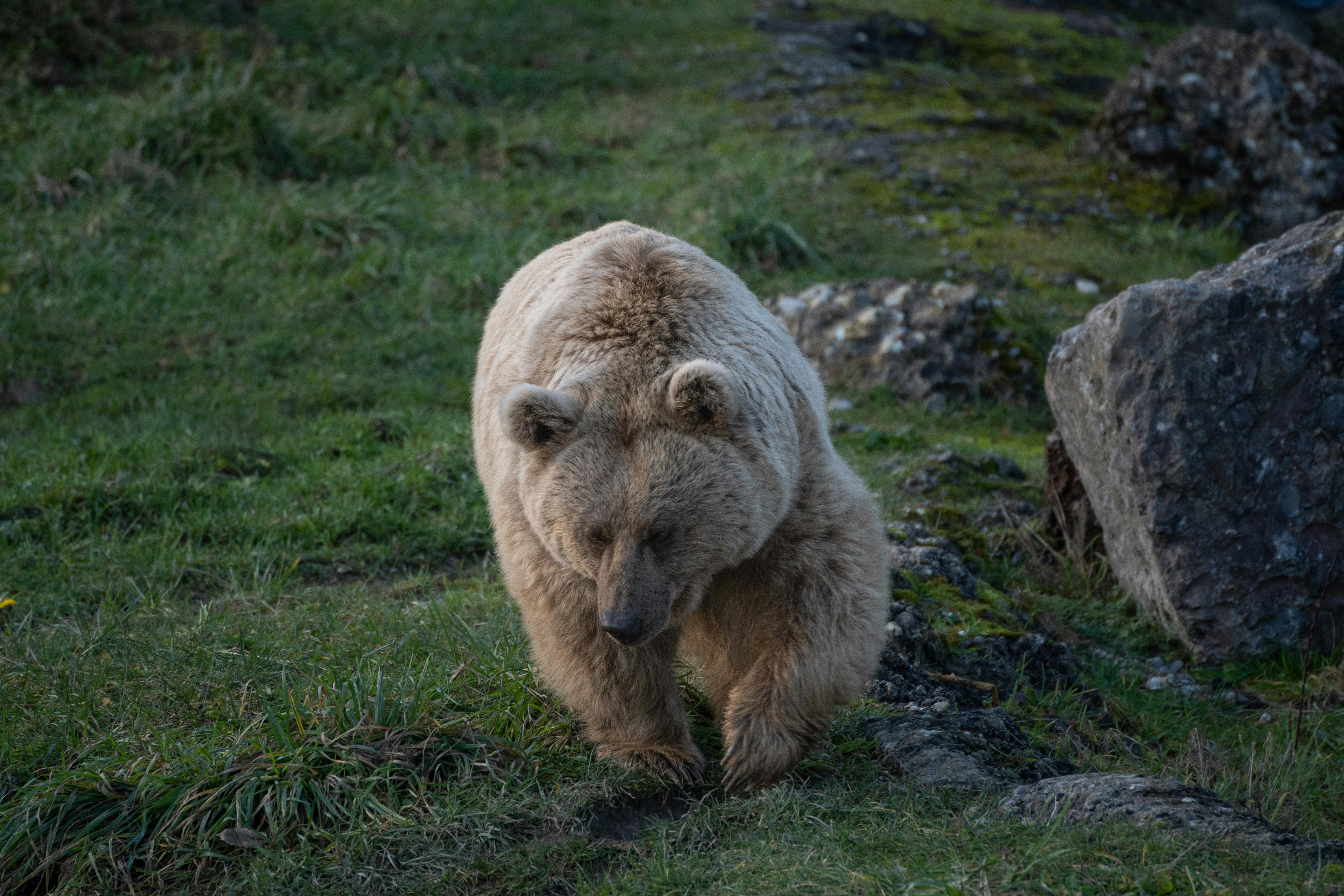
The year is 2026, and Artificial Intelligence (AI) has become the undisputed game-changer in wildlife photography. From advanced autofocus systems that instinctively track a fleeting leopard's eye to intelligent post-processing software that cleans noise with a single click, AI is reshaping how we capture nature's most elusive moments. This comprehensive guide explores the best AI cameras, software, and ethical practices to elevate your wildlife photography and help you make informed purchasing decisions for your next gear upgrade or specialized workshop.
Introduction to the Topic
Welcome to 2026, a pivotal year where the wild heart of nature meets the cutting edge of technology. For decades, wildlife photography has been a test of patience, skill, and sheer luck. But today, a powerful new ally has emerged: Artificial Intelligence. No longer just a futuristic concept, AI is now deeply embedded in our cameras, lenses, and post-processing workflows, offering unprecedented precision, speed, and creative control. As editors at roartigers.com, we’ve witnessed this transformation firsthand, and we believe that understanding and embracing AI is no longer optional – it’s essential for any serious wildlife photographer.
This article will dive deep into how AI is redefining the craft, from intelligent autofocus systems that predict animal movement to advanced computational photography techniques that pull detail from the shadows. We’ll explore the ethical considerations of this powerful technology and, crucially, provide you with an in-depth comparison of the best AI-powered cameras, software, and services available today, ensuring your next investment is a smart one. Whether you're a seasoned pro looking to upgrade your kit or an aspiring enthusiast ready to capture breathtaking moments, join us as we navigate the thrilling new landscape of AI-powered wildlife photography.
Backgrounds & Facts
The journey of technology in photography has always been about pushing boundaries, from the advent of faster film to the digital revolution. AI represents the next giant leap. What started with rudimentary face detection has rapidly evolved into sophisticated algorithms capable of identifying and tracking specific animal species, predicting their movements, and even optimizing exposure in real-time. By 2026, AI is not just a feature; it's the backbone of modern photographic innovation.
Key AI Applications in Wildlife Photography:
- Intelligent Autofocus & Subject Tracking: Modern mirrorless cameras now boast AI-trained autofocus systems that can differentiate between a bird's body, head, and eye, even through dense foliage or in challenging light. These systems learn animal behaviors, predicting flight paths or sudden turns, dramatically increasing the keeper rate for fast-moving subjects.
- Advanced Noise Reduction & Sharpening: AI-powered software can distinguish genuine image detail from noise with unparalleled accuracy, allowing photographers to push ISO limits further than ever before. Sharpening algorithms enhance fine textures without introducing artifacts, delivering pristine images even from challenging conditions.
- Computational Photography: Beyond traditional exposure bracketing, AI enables cameras to merge multiple frames for extended dynamic range, create perfectly focused stacks from moving subjects, or even generate high-resolution images from lower-resolution captures, all processed in-camera or with minimal post-production effort.
- Smart Composition & Cropping: Some AI tools can analyze an image for optimal composition, suggesting crops or even automatically adjusting perspectives to adhere to classic photographic rules, helping beginners and offering new perspectives to experts.
- Generative AI for Backgrounds & Enhancements: While controversial, generative AI is increasingly used for subtle background extensions, removal of distracting elements, or even creating artistic interpretations. Ethical discussions around its use for journalistic or documentary wildlife photography are ongoing and paramount.
- Image Culling & Tagging: AI can rapidly sort through thousands of images, identifying sharp, well-exposed shots of specific species, and even applying metadata tags, saving countless hours in post-production workflow.
Major camera manufacturers like Sony, Canon, and Nikon have heavily invested in proprietary AI chips and algorithms, making their latest mirrorless bodies indispensable tools. Simultaneously, software developers like Adobe, Topaz Labs, and Skylum have integrated powerful AI engines into their editing suites, democratizing access to professional-grade enhancements.
Expert Opinion / Analysis
We sat down with Dr. Anya Sharma, a renowned computational photography expert and veteran wildlife photographer, to discuss the profound impact of AI.
"The evolution has been staggering," Dr. Sharma explains. "Just five years ago, predicting a kingfisher's dive was purely instinctual. Now, my Canon EOS R1 Pro's AI can anticipate it, locking focus with an accuracy that feels almost clairvoyant. It's not just about getting the shot; it's about pushing creative boundaries in ways we never thought possible."
However, Dr. Sharma also emphasizes the crucial balance. "AI is a tool, not a replacement for skill. The photographer's eye, understanding of animal behavior, and ethical judgment remain paramount. There's a fine line between enhancement and fabrication. For roartigers.com readers, I'd stress the importance of transparency, especially when utilizing generative AI. Always ask: Does this image accurately represent what I witnessed, or have I altered its reality significantly?"
She continues, "The accessibility of AI also means more people can enter this field, which is fantastic for conservation awareness. But it also means a saturation of imagery. To stand out, photographers must use AI intelligently – not just to fix mistakes, but to unlock new creative avenues, capture moments previously impossible, and tell compelling stories."
The debate around AI's ethical implications is robust. While AI can remove a distracting twig, where do we draw the line? Should AI be used to 'create' a more dramatic sky if the original was mundane? Most experts agree that for documentary or journalistic wildlife photography, AI should be used for enhancement and correction (e.g., noise reduction, sharpening, minor cloning) rather than significant alteration or generation of elements that weren't present in the original scene. For artistic or conceptual work, the rules can be more flexible, provided full disclosure is given.
💰 Best Options in Comparison (VERY IMPORTANT)
For photographers with purchasing intent, navigating the AI landscape can be daunting. Here’s a breakdown of the top AI-powered gear and software that deliver exceptional value and performance in 2026, optimized for your investment.
-
Sony Alpha A1 II: The Speed Demon with Predictive AI
The successor to the legendary A1, the Alpha A1 II (or A2, depending on Sony's naming) in 2026 sets the benchmark for speed and AI integration. Its advanced BIONZ XR AI processor offers unparalleled real-time animal eye AF, tracking even the most erratic subjects with tenacious precision. Ideal for birds in flight, fast predators, and action sequences. Expect a significant investment, but one that pays dividends in keeper rates and image quality.
-
Canon EOS R1 Pro: Computational Powerhouse
Canon's flagship mirrorless, the EOS R1 Pro, leverages a new generation of deep-learning AI for its autofocus and computational photography capabilities. Beyond tracking, it offers advanced in-camera stacking for depth of field, intelligent exposure bracketing for high-contrast scenes, and superior low-light performance through AI-driven noise reduction. A formidable choice for those who value cutting-edge computational features and robust build quality.
-
Nikon Z9 III: Rugged Reliability Meets Smart Tracking
Building on the Z9's legacy, the Z9 III (or Z9s) by 2026 refines its AI-driven subject detection and tracking, offering an incredibly reliable system for a wide range of wildlife. Its robust construction makes it a favorite for extreme environments, while its refined AI engine ensures sharp focus on diverse subjects, from insects to elephants. A fantastic all-rounder for serious enthusiasts and professionals.
-
Fujifilm X-H3s AI: APS-C Powerhouse for the Agile Photographer
Don't underestimate APS-C. The X-H3s AI is a compact, lightweight marvel, perfect for photographers needing agility in the field. Its AI processor provides surprisingly sophisticated animal AF and excellent image stabilization, making it a budget-friendly yet highly capable option, especially when paired with Fujifilm's superb telephoto lenses. Great for travel and those who prefer a smaller footprint.
-
Topaz Photo AI 3.0: The Essential Post-Processing Suite
This software has become indispensable. Topaz Photo AI 3.0 (or its equivalent for 2026) combines AI-powered noise reduction, sharpening, and upscaling into one intuitive package. It intelligently analyzes your image and applies the optimal settings, saving hours in post. A must-have subscription for anyone serious about maximizing their image quality, especially from high-ISO shots.
-
Adobe Creative Cloud (with Sensei AI Enhancements): Industry Standard Evolved
Adobe Lightroom and Photoshop, powered by the ever-evolving Sensei AI, continue to be the industry standard. By 2026, expect even more refined AI masking tools, generative fill for seamless content-aware adjustments, advanced sky replacement, and intelligent color grading. The subscription model offers continuous updates and integration with a vast ecosystem of tools.
-
Skylum Luminar Neo 2026 Edition: Creative AI for Artistic Expression
For those who love creative control with AI assistance, Luminar Neo 2026 offers powerful tools like AI Sky Replacement, Relight AI, and Structure AI, allowing for dramatic enhancements with minimal effort. While perhaps less focused on pure documentary work, it's excellent for artistic wildlife portraits and landscape integrations.
Comparison Table: Top AI Wildlife Photography Gear & Software (2026)
| Product | Key AI Feature(s) | Target User | Pros | Considerations | Estimated Price (2026) |
|---|---|---|---|---|---|
| Sony Alpha A1 II | Predictive Animal Eye AF, Real-time Tracking, AI-powered Stabilization | Professional Action & Bird Photographers | Unmatched speed, superior AF accuracy, high resolution | Premium price, steep learning curve for advanced features | $6,999 - $7,499 (Body Only) |
| Canon EOS R1 Pro | Deep-learning Animal AF, In-camera Focus Stacking, AI Noise Reduction | Professionals seeking computational advantages & robust build | Exceptional computational features, excellent low-light, durable | High investment, potentially heavier than competitors | $6,499 - $6,999 (Body Only) |
| Nikon Z9 III | Refined 3D Tracking, Advanced Subject Detection (15+ types), AI Exposure | Versatile Pros & Advanced Enthusiasts, extreme conditions | Unrivaled reliability, robust build, versatile AF, no blackout EVF | Large form factor, slightly less computational focus than Canon | $5,799 - $6,299 (Body Only) |
| Fujifilm X-H3s AI | Intelligent Animal AF, AI-assisted IBIS, Smart Exposure Modes | Agile Photographers, Travel Wildlife, Budget-conscious Pros | Compact & lightweight, excellent image quality for APS-C, strong value | Smaller sensor limits ultimate low-light performance vs. full-frame | $2,499 - $2,799 (Body Only) |
| Topaz Photo AI 3.0 | AI Denoise, Sharpen, Upscale (Autopilot Mode) | All photographers wanting to maximize image quality | Unparalleled noise reduction, intuitive workflow, significant time-saver | Requires powerful computer, one-time purchase + optional updates | $199 - $249 (Annual Update Option) |
| Adobe Creative Cloud | Sensei AI Masking, Generative Fill, Content-Aware Tools, Smart Adjustments | Industry professionals, those needing a full ecosystem | Comprehensive tools, seamless integration, continuous updates | Subscription model, can be resource-intensive | $9.99 - $59.99/month (Photography Plan to All Apps) |
| Skylum Luminar Neo 2026 | AI Sky Replacement, Relight AI, Structure AI, Portrait AI (for animals) | Creative photographers, those seeking artistic enhancements | Intuitive creative tools, powerful one-click enhancements, good value | Less granular control than Photoshop, may lean towards 'artistic' | $99 - $149 (One-time, with optional extensions) |
Beyond gear, consider investing in specialized AI wildlife photography workshops. Many leading photographers and organizations now offer courses specifically designed to teach you how to leverage these advanced AI features ethically and effectively. Look for workshops endorsed by reputable wildlife conservation groups to ensure responsible practices.
Outlook & Trends
The trajectory of AI in wildlife photography is only accelerating. By the end of the decade, we can expect even more profound advancements:
- Hyper-Personalized AI: Cameras will learn individual photographers' styles and preferences, automatically applying subtle adjustments to exposure, color, and composition based on past successful images.
- Real-time Scene Analysis & Predictive Shooting: Imagine a camera that not only identifies a subject but also predicts its next move with high accuracy, automatically buffering or even capturing a sequence before you fully react.
- AI-Powered Drones for Ethical Observation: Miniaturized, ultra-quiet drones equipped with advanced AI could allow for non-invasive wildlife observation and photography from a distance, minimizing disturbance. Strict ethical guidelines and regulations will be crucial here.
- Enhanced Computational Lenses: Lenses themselves might integrate AI to correct aberrations, extend reach digitally with minimal quality loss, or even perform real-time focus adjustments across complex scenes.
- Authenticity Verification: As generative AI becomes more sophisticated, so too will AI-driven tools designed to verify the authenticity of an image, helping to combat misinformation and maintain integrity in documentary photography.
The debate surrounding authenticity will continue to evolve. As AI blurs the lines, the industry will need to establish clear standards and labeling for AI-assisted images, distinguishing between minor enhancements and significant alterations. Education for both photographers and viewers will be key to navigating this new visual landscape.
Conclusion
Artificial Intelligence has irrevocably transformed wildlife photography, moving it from a realm of pure chance and raw skill to one where technology acts as an intelligent co-pilot. In 2026, embracing AI is about more than just keeping up; it's about unlocking new creative potential, capturing previously impossible moments, and ultimately, telling more compelling stories about the natural world.
While the tools are powerful, remember Dr. Sharma's words: the photographer's vision and ethical compass remain the most crucial elements. AI is here to augment your abilities, not replace your passion or responsibility. By carefully choosing the right AI-powered camera and software, investing in specialized training, and adhering to ethical best practices, you can elevate your craft to unprecedented heights.
The wild is calling, and with AI by your side, you're better equipped than ever to answer. Explore the options presented, consider your personal photographic goals, and make an informed decision to upgrade your kit. The future of wildlife photography is incredibly exciting, and with the right AI tools, you'll be at the forefront of capturing its untamed beauty for generations to come.