
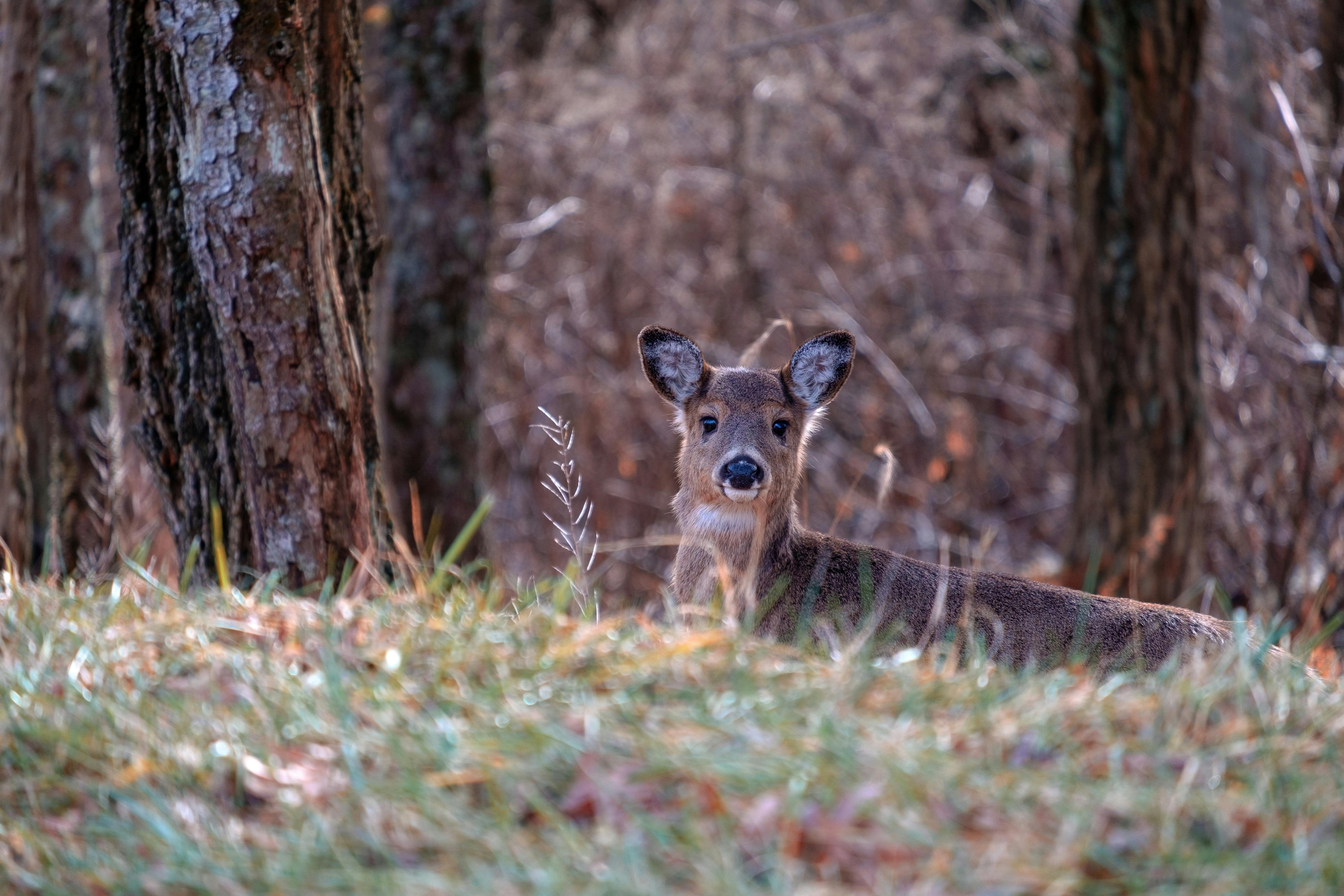
The standard advice to keep the sun behind the photographer produces evenly lit, low-contrast images. In wildlife work the more interesting results usually come from doing the opposite.
Front light removes the information shadows carry
With the sun behind the camera, shadows fall away from the viewer and are largely hidden by the subject itself.
Shadow is what conveys shape and texture, so removing it flattens the animal into a well-exposed but dimensionless record of colour and pattern.
It also lights the background as brightly as the subject, which means the animal competes with everything behind it for the viewer's attention.
Backlight creates separation without any background control
When the light source is behind the subject, the edges of fur, feathers and horns catch it and produce a bright rim against a darker background.
That rim outlines the animal precisely, which is why backlit images read clearly even when the animal is small in the frame or the setting is cluttered.
The background falls into shadow at the same time, since it is not receiving light towards the camera, and the subject is isolated by the lighting rather than the aperture.
Translucent material becomes visible
Light passing through thin structures illuminates them from within, so ears, wings, whiskers and fine body hair glow rather than reflecting.
Airborne material behaves the same way. Dust raised by hooves, breath on a cold morning and spray from water are visible only when lit from behind.
These elements convey conditions and motion that no amount of front lighting reveals, and they are often what distinguishes a scene from a portrait.
Exposure has to be decided deliberately
Metering systems read the bright background and underexpose the subject, which produces either a silhouette or a muddy compromise between the two.
The choice is between exposing for the highlights and accepting a silhouette, or exposing for the subject and letting the background clip to white.
Both are legitimate, but they must be chosen rather than averaged, since the automatic result usually sits between them and satisfies neither intent.
Flare is the practical obstacle
Light striking the front element at an angle scatters inside the lens, reducing contrast and producing visible artefacts across the frame.
Shading the front element with a hood, a hand or a positioned vehicle window restores contrast substantially, and this is often the difference between a usable frame and a washed-out one.
Long telephoto lenses are comparatively resistant because of their deep hoods, which is one reason backlighting is more practical in wildlife work than in wide-angle photography.