
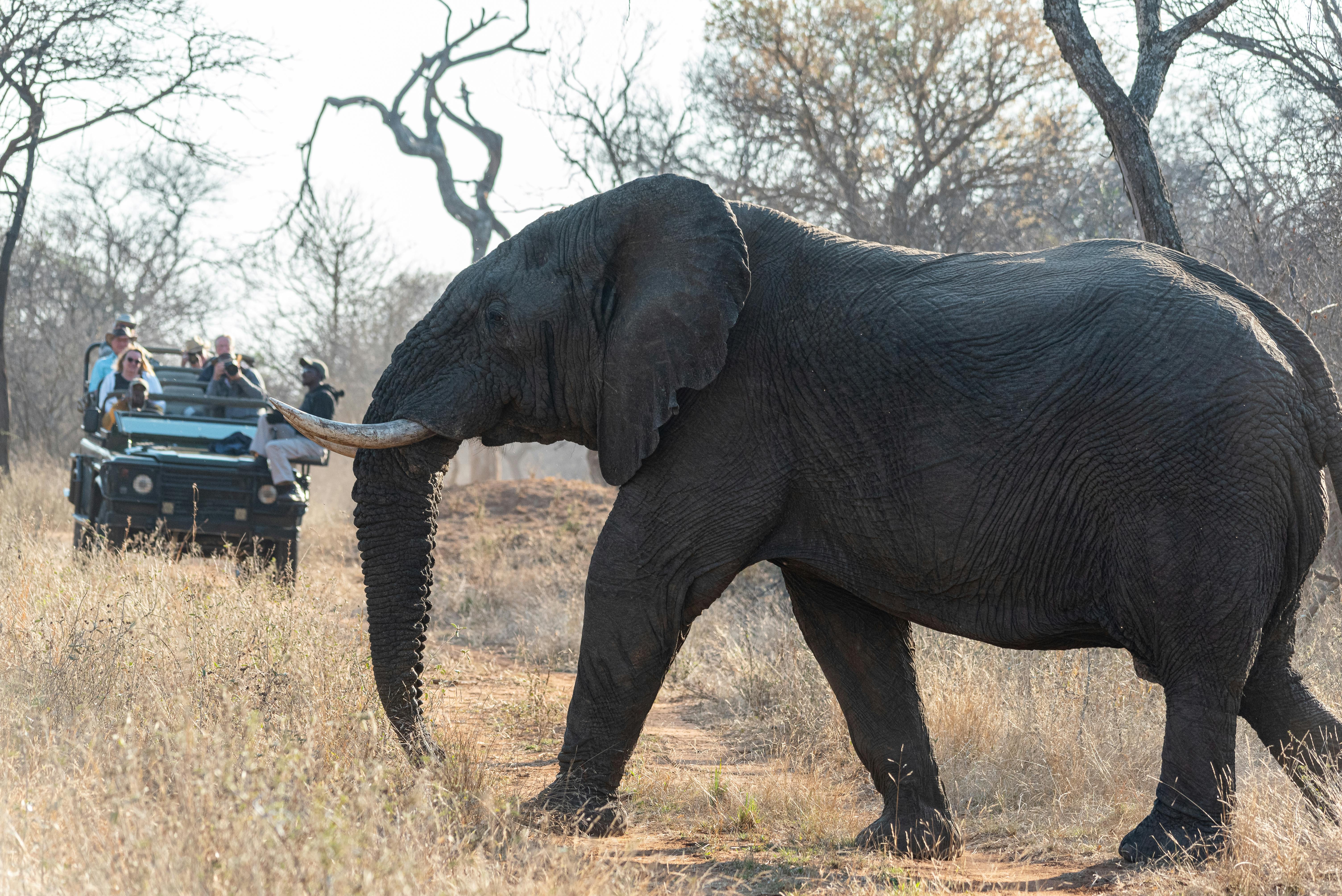
Safari itineraries almost everywhere put guests in vehicles before sunrise and again in late afternoon. The timing follows animal behaviour, which in turn follows temperature.
Large mammals manage heat by resting
Big-bodied animals gain heat faster than they can shed it, because volume rises more steeply than surface area. Midday activity is expensive for them in a way it is not for small species.
The practical response is to move during the cool hours and rest through the heat, usually in shade and often out of sight from a track.
So the animals are not absent at noon. They are stationary, concealed and doing nothing that reads as activity from a vehicle a hundred metres away.
Predators concentrate their effort into the same windows
Most large carnivores hunt in low light, which gives them an advantage over prey species that see less well in those conditions.
Kills therefore cluster around dawn and dusk and through the night, and the aftermath, including feeding and scavenging, continues into early morning.
A drive that starts before first light arrives while that sequence is still running. By mid-morning the carcass has usually been taken over by scavengers or abandoned.
Water dictates where animals will be
In dry seasons, drinking is the one activity that brings animals to a predictable place at a predictable time, and most drink in the cooler hours.
Guides use this directly. Positioning near water in late afternoon converts an open-ended search into waiting somewhere the animals have reason to come.
It also concentrates species that would otherwise be dispersed, which is why waterhole sightings often include several species within a short period.
Light is the other constraint
Low sun angles produce the conditions that make animals visible and photographable, with detail retained in fur and less glare from pale ground.
Midday light is overhead and harsh, and heat haze rises off open ground, which degrades visibility at exactly the distances at which animals are usually seen.
Vehicles also generate their own dust and vibration in dry heat, and both reduce the practical range at which a guide can spot movement.
Night drives sit under different rules
Where night drives are permitted, they use filtered spotlights and are restricted in duration, because repeated lighting disturbs hunting and feeding.
Many national parks prohibit them entirely and confine after-dark activity to private concessions, which is one reason concessions and parks offer different experiences.
The restriction reflects a straightforward trade-off. The most active hours for predators are also the hours when disturbance costs them the most.