
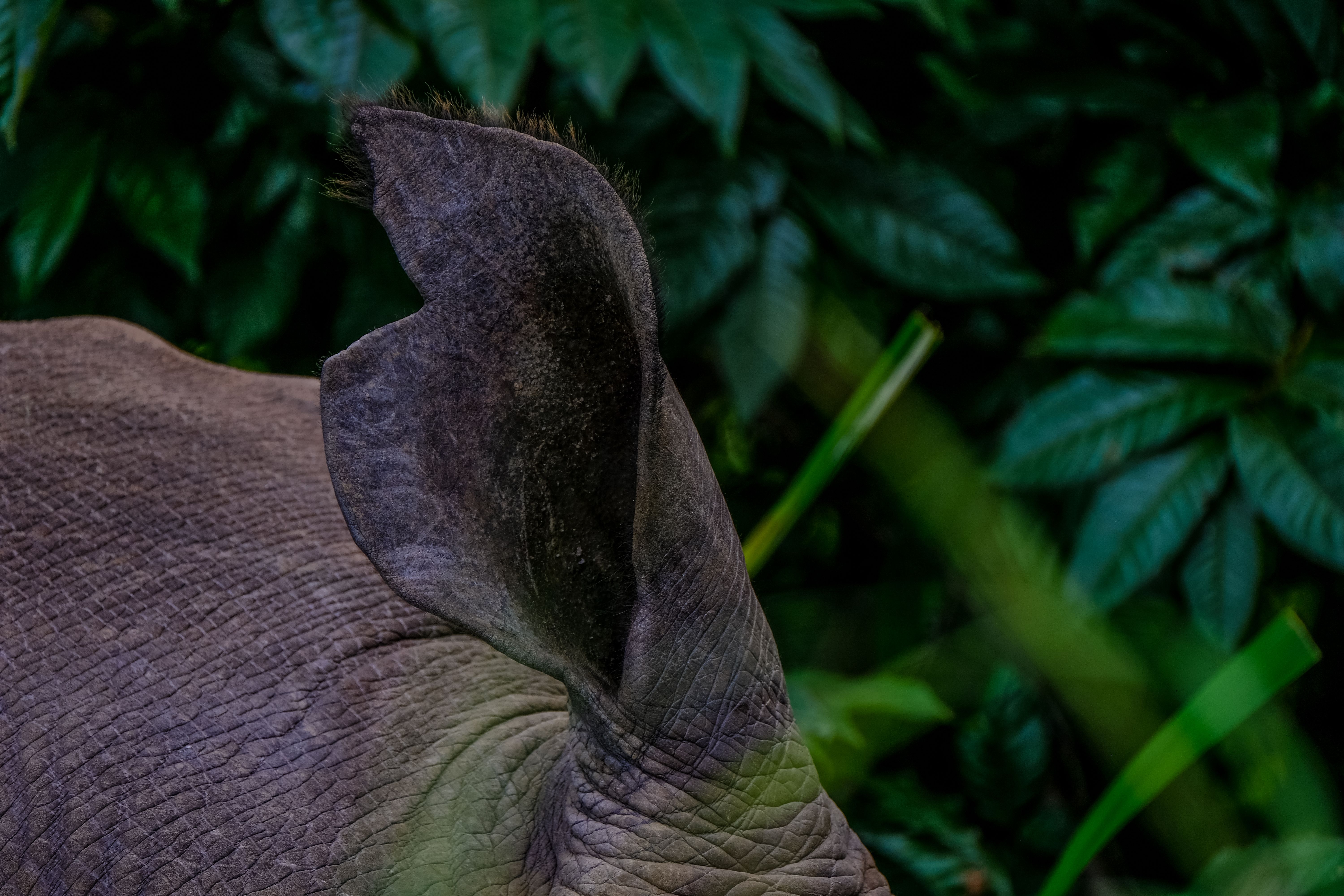
A species does not decline at a steady rate until it disappears. Below a certain population size, new mechanisms take over and push the decline forward independently of the original threat.
Chance stops averaging out
In a large population, the sex ratio and survival of young animals settle near their expected values because many individuals are involved.
In a population of a few dozen, a single bad breeding season or a run of male-biased births has a disproportionate effect that the population cannot absorb.
This randomness is not a threat that can be removed. It is a property of small numbers, which is why very small populations remain fragile even when protected.
Genetic variety erodes and cannot be recovered
Every generation in a small population loses some genetic variation simply because only a subset of individuals breed and pass on their genes.
As shared ancestry accumulates, harmful recessive traits appear more often. Fertility falls, deformities become more common and immune response narrows across the group.
Variation lost this way does not return through protection alone. It can only be restored by introducing animals from another population, if one still exists.
Finding a mate becomes the constraint
Species that were once abundant often depend on density. Colonial nesters, mass spawners and animals that gather to breed need a crowd for the behaviour to function.
When numbers thin out, individuals may simply fail to encounter each other during the breeding window, even though suitable habitat remains available.
This is why some species keep declining after harvesting stops. The remaining animals are too scattered for reproduction to occur at replacement rate.
The habitat left behind is usually the poorest
Populations rarely shrink evenly. They persist longest in marginal terrain that was never worth converting, because the productive habitat went first.
Marginal habitat supports fewer animals per unit area and offers less buffer in a bad year, so the population's capacity is lower than the map suggests.
Recovery therefore requires restoring or regaining better habitat, not simply protecting the remnant. Protecting the remnant stabilises the low point rather than reversing it.
Why intervention gets more intrusive as numbers fall
At moderate population sizes, removing the pressure is often enough and the species recovers on its own. That option narrows as numbers drop.
Very small populations tend to need managed breeding, genetic exchange between sites, and individual monitoring, all of which are expensive and open-ended commitments.
The practical lesson is that acting early is not merely cheaper. It is the difference between a species that can recover unaided and one that requires permanent management.