
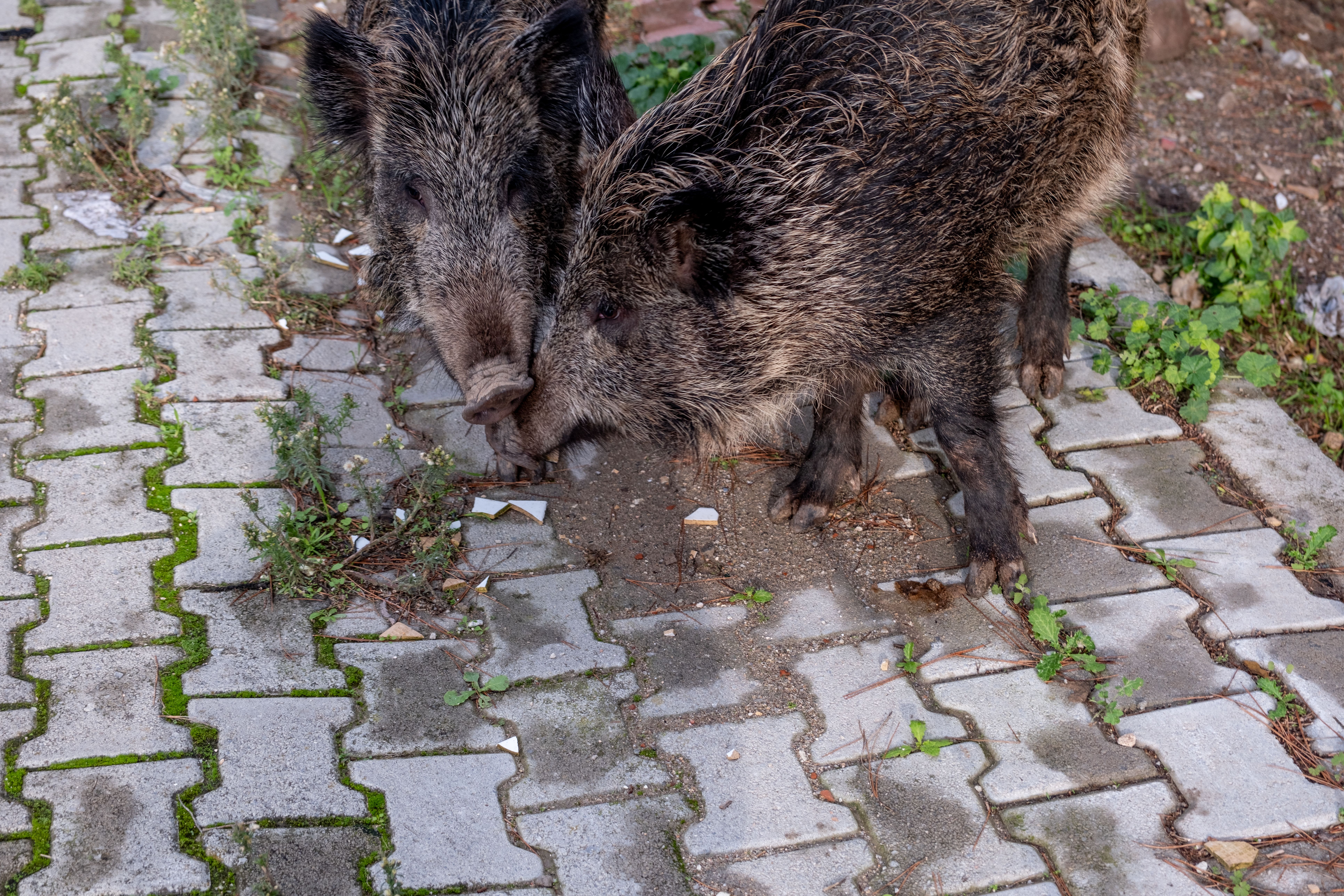
Wildlife photography equipment looks disproportionate next to other kinds of camera gear. The size follows directly from two constraints: distance to the subject and the light available when animals move.
Focal length substitutes for approach
Animals have a distance inside which they stop behaving naturally, and crossing it either ends the sighting or changes what is being photographed into a reaction to the photographer.
A long lens lets the frame be filled from outside that distance, so the image shows undisturbed behaviour rather than an animal looking directly at a person.
It also matters for safety with large or dangerous species, where the working distance is set by risk rather than by what the photographer would prefer.
Wide apertures buy shutter speed in poor light
Most mammal activity concentrates around dawn and dusk, which are the hours with the least light and the most movement to freeze.
A wider maximum aperture admits more light, allowing a faster shutter speed at the same sensitivity setting, which is what prevents motion blur in a moving animal.
Sensitivity can be raised instead, and modern sensors tolerate a great deal of it, but noise still costs fine detail in fur and feathers where it is most visible.
Aperture also controls what the background does
Wild settings are cluttered, and a busy background competes with the subject in a way that studio conditions never impose.
A wide aperture at long focal length renders the background as smooth tone, which separates the animal from its surroundings without any post-processing.
The same shallow depth of field is unforgiving of focus error, which is why autofocus performance is as important as the optics themselves for this kind of work.
Physics sets the size and the price
Maintaining a wide aperture at long focal length requires a large front element, because the aperture diameter is the focal length divided by the aperture number.
That glass must be large, precisely shaped and made from low-dispersion materials to control colour fringing, and all three drive weight and cost sharply upward.
The consequences are practical: heavy lenses need support, and a tripod, monopod or beanbag becomes part of the technique rather than an optional accessory.
The compromises photographers actually make
Zoom lenses with variable apertures trade a stop or two of light for reach, flexibility and a great deal less weight, which suits vehicle and hide work well.
Smaller sensor formats extend effective reach for a given lens, at the cost of some low-light performance, which is a reasonable trade for distant subjects in daylight.
The choice is usually about which constraint binds hardest on a given trip, since no single combination handles distance, light and portability at once.